

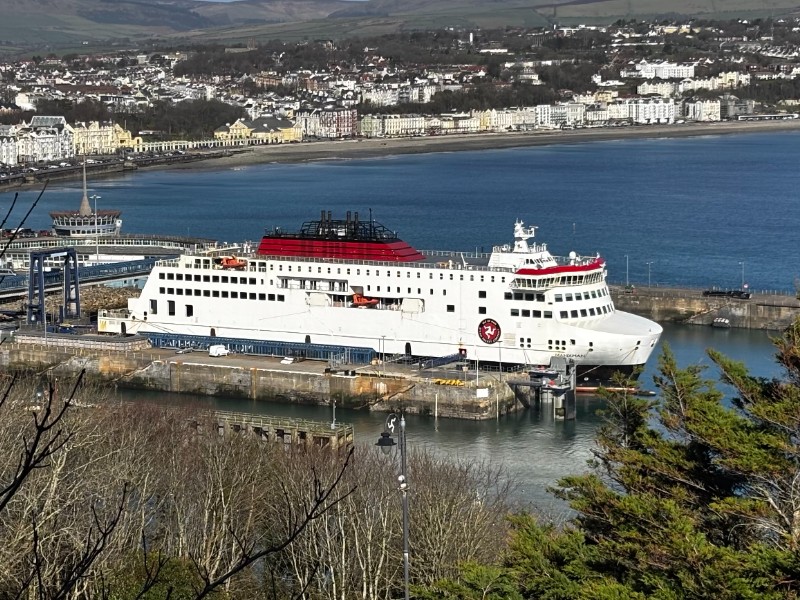
88 percent of respondents report a negative business impact from the surcharge
More than 15 percent of companies surveyed by the Chamber of Commerce say the fuel surcharge applied by the Steam Packet Company to freight customers threatens the viability of their businesses.
In a media statement, the chamber says the ferry company is '100 percent government owned' and therefore 'has the power to control the degree to which increases are passed on to businesses'.
The Chamber of Commerce says 88 percent of respondents report a negative business impact from the surcharge, and that not one selected the 'no action required' option when it came to government prioritising intervention in regard to the freight surcharge.
In fact, the business body wants government to consider three action points as a matter of urgency:
- To provide clear and regular communication about how the surcharge level is set and how it will be reviewed as fuel markets change.
- To assess whether targeted intervention of the surcharge, even in part, represents a cost-effective way of protecting businesses and consumers from broader inflationary pressures.
- To consider whether additional support is needed for the sectors most acutely affected, including hospitality, healthcare and the charity sector.
For its part, the Steam Packet says fuel costs are double what they were in late December.
The company points out that the fuel surcharge has existed for over 20 years under the original User Agreement and more recent Sea Services Agreement, and is a non-profit mechanism independently verified by the DoI.
Its statement in full: "The Steam Packet Company is facing fuel costs that are around double what they were in late December 2025. While global fuel markets remain volatile, the latest fuel surcharge change has had only a modest effect on freight and passenger fares, increasing standard fares by less than 2%.
The fuel surcharge has existed for over 20 years either under the original User Agreement and the more recent, Tynwald approved, Sea Services Agreement. It’s a non‑profit mechanism which is independently verified by the Department of Infrastructure.
Fuel surcharges are a common measure adopted by the travel industry to help protect service delivery during periods of fuel price unpredictability.
The Company remains focused on balancing cost pressures with its long‑standing commitment to residents and businesses.”
 General Election candidate charged with harassment
 Four new homes planned for Santon
 Manxman parts being repaired in Denmark
 "We're watching you" warning for OCGs trafficking drugs to Island