

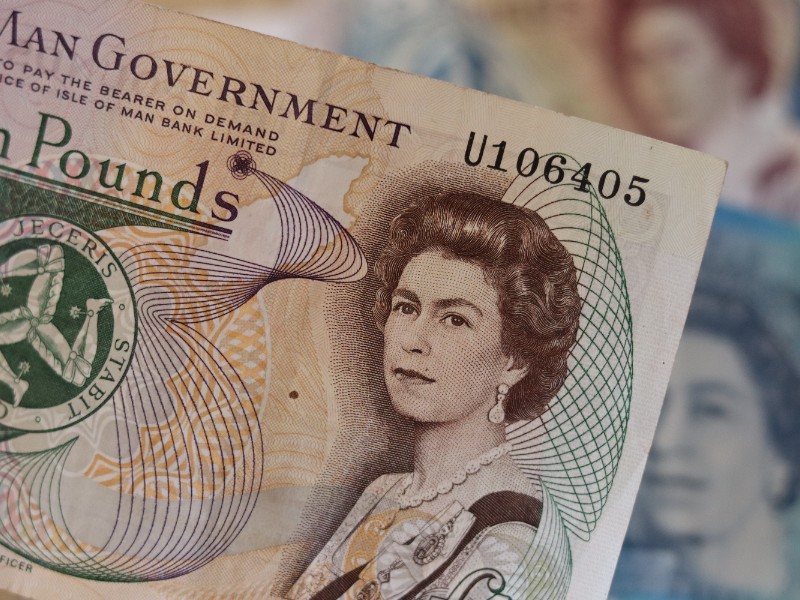
We've been finding out why fixing the Island's economy is such a big priority for our new government
If I had a £1 for every time I heard an election candidate in 2021 say they wanted to 'diversify the economy'... well, I'd probably have about 50 quid but still, it was one of the biggest talking points on the doorstep five years ago.
And there's been a lot for the economy to cope with in that time.
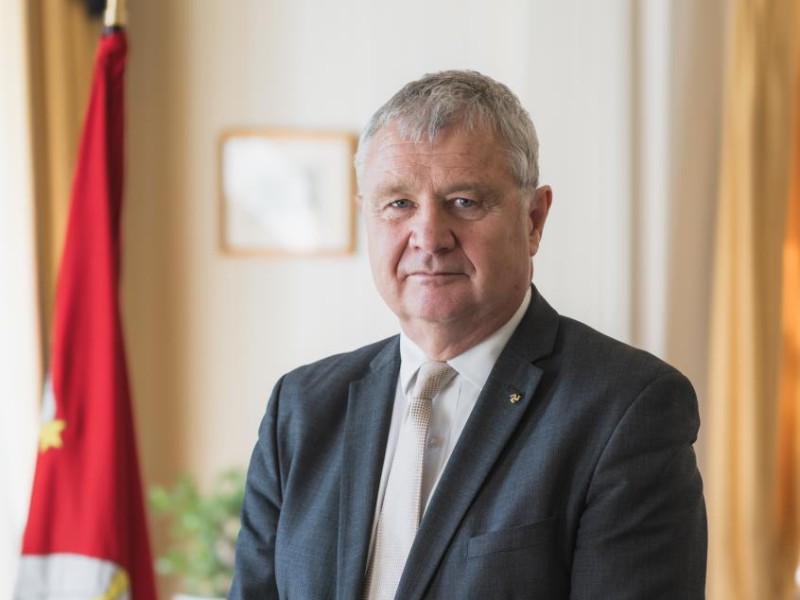
So let's have a look at what's changed in the past five years, and see what some of the key priorities are going to be for our new chief minister and his government.
Global Events
What became almost a bit of a 'get out of jail free' card for the previous administration was being able to use the excuse of the impact of 'global events' on our economy.
And, to be fair there were a fair few of them.
Cast your mind back to 2021, and we were still very much in the throws of the Covid-19 pandemic, which of course has had long-lasting impacts on pretty much all parts of our society.
With the various lockdowns, people weren't allowed to leave the house, drastically affecting retail and hospitality businesses in particular.
As a result, government spent a huge amount of money trying to support the most affected sectors and people in them, trying to help bridge the gaps.
And Covid recovery, unsurprisingly, became one of the key focuses for many election candidates last time round as a result.
There were also two wars in particular which have impacted almost every country around the world - the Ukraine War and the Iran-Israel conflict.
Which leads me onto...
The Cost of Living Crisis
In February 2022, Russia and Ukraine went to war, which started a chain of events that ultimately led to the start of the Cost of Living Crisis.
I don't think it's an overstatement to say that almost every single person on the Island has felt the impact of the cost of living over the past five years in some way or another.
Food is more expensive, fuel is more expensive, energy is more expensive, just existing seems to be more expensive than it was five years ago.
And in that time, dozens of businesses have closed their doors, with many citing the rising prices as the final nail in the coffin for them post-Covid.
But it's reignited conversations about how the Isle of Man can be more self-sufficient so we can be better shielded from the effects of global events.
Food Security
One of those discussions is around food security, and making sure we can produce enough food here on-Island to make sure the shelves are always stocked.
It's something the Manx National Farmers' Union (MNFU) has long been campaigning for, and especially since Shoprite was sold to UK supermarket giant Tesco in 2023.
Shoprite (no, don't say it) was in fact, a classic case of "you don't know what you've got until it's gone" for many food producers here, because it really was the champion of 'shop local'.
And since the sale, it's been much harder to get Manx food on the shelves because of all the different processes they now have to go through to do it.
Government has been trying to support businesses with this and help them get the various accreditations they need, and Tesco has started stocking more Manx products since the takeover.
But in 2025, the MNFU launched a petition calling for more food eaten here to be made here.
It claimed government figures showed almost 100 percent of food consumed on Island was imported, something it argued was unsustainable.
At the time, the petition was fully supported by the then DEFA Minister Clare Barber, who was also hopeful the Food Security Plan and the Agricultural Strategy, passed in Tynwald in November 2024, would help ease the pressure on local producers.
However, food security was a big talking point in the run up to last month's election, and just this week the MNFU has declared it has 'no confidence' in the senior leadership of DEFA, showing a clear need for work still to be done in that area.
Renewable Energy
Something else that's been tied into addressing the cost of living is increasing the use of renewable energy on the Island.
Government promoted a number of grants aimed at helping people make their homes more energy efficient, and has also started installing solar panels on some of its own buildings, including the NSC.
However, the two biggest steps taken during the last administration towards renewable energy have been the plans for two wind farms.
The first is the Cair Vie project, which is being planned by Manx Utilities.
It's hoping to be able to build an onshore wind farm at Earystane and Scard, which it's thought will generate around a third of the Island's needed electricity.
When the plans were first unveiled three years ago, it was hoped the turbines would be up and running in 2026 - although seeing as we're coming to the end of the year and a planning application still hasn't been submitted, that deadline seems likely to be missed.
That project has also flown relatively under the radar though when standing in the (very tall) shadow of Ørsted's Mooir Vannin proposals.
The private developer is looking to build 87 wind turbines off the east coast of the Isle of Man, and one of the first big jobs for Chris Thomas' Council of Ministers will be reviewing the results of the MIMA inquiry and deciding whether or not the plans should be able to progress.
Ørsted has promised it's working with Manx Utilities and Isle of Man Government to explore preferred options to bring power to the Island, and has confirmed it will commit investment to bring power generated by Mooir Vannin here - should the Isle of Man Government and Manx Utilities choose to pursue it.
However, the wind farm has proven to be extremely controversial, becoming one of the biggest issues on the doorstep in the run up to the 2026 General Election.
Many believe the project's been shrouded in secrecy, with the full extent of the plans not yet being made publicly available, and want to have all the information available before a decision of that scale is made.
Others are, understandably, concerned about the visual impact of these huge wind turbines on our doorstep.
And while Ørsted insists there's a lot of misinformation surrounding the scheme, it hasn't been able to alleviate the concerns of those whose sea views will be changed forever.
So it will be interesting to see the results of the MIMA inquiry in December, and even more interesting to see how the new Council of Ministers will vote on it.
But over the past five years, renewable energy has definitely seen a bit of a rebrand, going from being something where its primary focus was to help reduce climate change, to now being a way of having 'energy security', in a world where energy is becoming an increasingly expensive commodity.
Reserves
Another big concern about the previous administration was its use of our reserves to keep the books balanced.
But how have our reserves really fared in those five years?
Well, when you look at the Pink Books from those financial years, the answer would seem to be - relatively well.
In 2021, the reserves sat at £1.6 billion, while in the 2026/27 Pink Book published in February, that figure sat at £1.9 billion.
And that rise is despite government consistently drawing down between £85-150 million every year.
So on the surface, that sounds good, right?
Well, it's been a cause for concern for political commentator Alistair Ramsay, and also a number of the newly-elected MHKs too.
Alistair breaks it down in a way that even I can understand, by explaining that all this means that government's annual spending is roughly £100 million more than it is earning.
To fix that, it's been using money from its reserves, which he says is ultimately unsustainable.
He believes the options to end that deficit are either drastic cuts in government spending and staffing, increased taxation, or praying for an economic miracle.
Some of the new MHKs have also suggested reassessing which investments the reserves are in, and seeing whether there are any more speculative investments that could be made instead - i.e. higher risk with potentially higher reward.
Although, when the reserves have grown by £300 million in five years, despite drawing down £660 million from them during that time, is that really a risk worth taking when our current investments seem to be performing so well?
'Diversifying the economy'
As I mentioned, 'diversifying the economy' was one of the big buzz phrases of the 2021 election, but what does it actually mean?
Well, in simple terms (and mainly for me because I honestly had no idea), it means attracting new industries to the Island, and in theory more jobs.
For example, the majority of people on the Island who are employed in the private sector work in either finance, hospitality or retail.
Although, in fact, the biggest employer here is currently the Isle of Man Government, with around 10 percent of the Island's population working in the public sector.
It does mean though that, for most people, if they want to do something outside that for work, then they'll need to look elsewhere.
It's thought to be part of the reason why so many young people leave the Island and don't come back, because they get experience in the UK, for example, and then can't find any similar roles in the Island in their field.
But it goes further than that too.
When you look at lots of other offshore jurisdictions, they all have a 'thing'.
The British Virgin Islands are known for their licensing of offshore accounts, The Marshall Islands for maritime and shipping registries, and the Caymans for investment and hedge funds, as a few examples.
But the Isle of Man doesn't have that.
For a while, you could have argued it was eGaming, but that sector's presence on the Island has been reducing in recent years.
So considering what our niche could be to attract new businesses here is going to be an important consideration for this government.
Taxes
One of the biggest announcements of the previous administration was plans to introduce an 'NHS levy'.
It was announced as part of the 2024 Budget, in the hopes of helping to fund the ever-growing healthcare costs.
The initial plan was to have a phased approach - raising the higher rate of income tax by two percent in the first year while the levy was created and introduced the following year - all while keeping personal allowance thresholds the same.
However, amid 'unforeseen' challenges, the implementation of the levy was delayed, and the higher rate of income tax was lowered by 1% the following year - which was still 1% higher than it had been.
Then, by October 2025, plans for the levy were scrapped completely.
But in February 2026, despite the personal tax allowance being raised significantly, the higher rate of income tax stayed at 21%.
So, over the past three financial years, the government has been taking more taxpayer money, but have we got value for money from that?
The extra income was ringfenced for health, and to be fair there have been a number of improvements made there in that time.
The waiting lists for dentists has now almost been eliminated after people were waiting up to five years to be assigned one, although that has come at the cost, for most, of not being able to have as many regular check ups.
The Child and Adolescent Mental Health Service (CAMHS) has also seen improvements, with waiting lists there slashed and quicker diagnoses for those with ADHD or Autism.
But are those enough to justify the extra income government's been receiving from taxpayers over the past three financial years?
Are people better off now than they were in 2021?
To answer this question, I'm going to share a moment of realisation I had recently when I was having dinner with my family.
I'm lucky enough to have one of my grandparents still with us, my parents and aunties and uncles were there and me - a woman (reluctantly in my mid-30s), all sat eating a spaghetti bolognaise I'd cooked.
As I sat and looked around this table full of people I loved, I was listening to every single one of us talking about how hard things were at the moment.
In my granddad's case, we're trying to work out how to give him the absolute best care and quality of life that we can by working out what we as a family can afford to pay, and how long realistically we'll be able to keep him in the house that he loves.
For my parents and their siblings, they're having to delay retirements because they're worried they won't have enough to be able to retire comfortably, especially with their households bills rising so drastically.
And for me, I'm a single mum who, despite earning what should be a decent salary, has had to move back in with my parents because I can't afford to rent a place by myself or to save up the deposit to buy one - and I'm not the only one in my peer group in this situation. Not only that but childcare costs are absolutely crippling me and the cost of putting fuel in my diesel car is astronomical.
For the first time I can remember in my lifetime, financial struggles are universal. They're not hitting one generation hardest, or one particular sector of society even, it's everyone.
No one is going out anymore because they can't afford to, holidays abroad are a luxury many of us can't even entertain the idea of, and reliance on foodbanks is higher than ever.
It is absolutely brutal out there at the moment.
Now, I'm not saying that government can wave a magic wand and fix all of these problems, nor should it.
What this election has done though is shown that people don't just want, but need government to be better at tackling issues as and when they arise.
It's a strategy the UK's new prime minister seems to be trying to adopt, and only time will tell if our new administration will follow suit.
The last government's focus appeared to be data-gathering (it spent millions of pounds in fact on fact-finding reports), so, in theory, this one should have all the information it needs to start moving forward.
The question is, will it?
 Teen took knife out of house to 'scare away' other teenagers
 Douglas Council looking to expand allotment scheme to give greater access to nature
 Emergency road closure in Tromode this evening
 Chief minister keen to release the lease for offshore wind farm